When Joe Waneka arrived at his new job as director of operations and facilities at the Aspen School District in the fall of 2023, he discovered a big problem at Aspen High School.
Earlier that year, the district had replaced two of the three natural gas condensing boilers at Aspen High, which heated the large school building, with two electric boilers that cost between $80,000 and $100,000 each. The plan was to include solar panels with the new electric boilers, but the numbers for the solar installation did not make financial sense so they were never installed, he said.
“Someone sold them on electrification,” Waneka said. “Unfortunately, they put all their eggs in one basket.”
When winter descended in October, he switched on the new electric boilers, turned the heat up to about 70 degrees and went about his business. Then six weeks later, the electric bill arrived.
“I saw the utility bill and my jaw dropped,” Waneka said. “It was $59,000 for the month.”
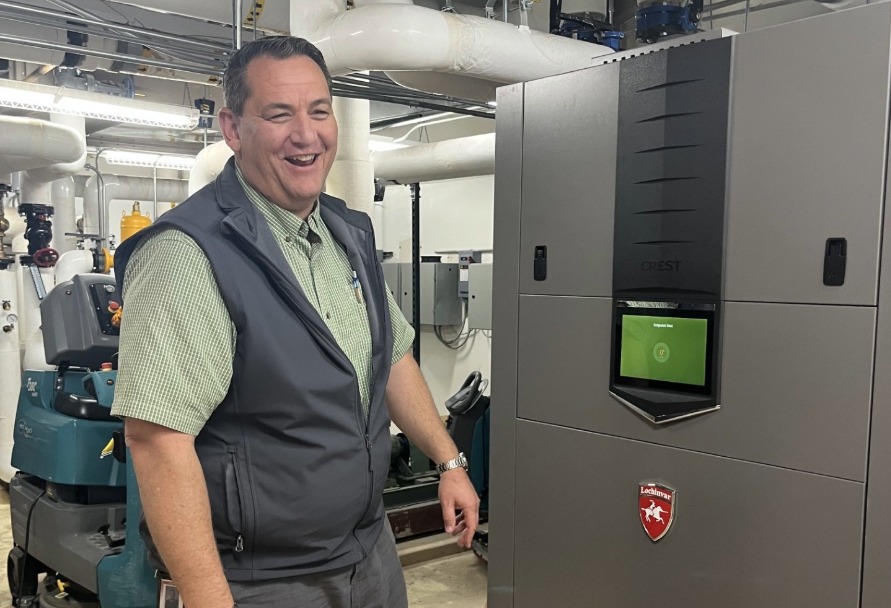
Waneka soon realized the school district could not afford to spend $60,000 a month on electricity and urged the administration and school board to buy a new high efficiency, 10 million BTU natural gas condensing boiler to replace the remaining gas boiler, which was on its last legs. The new boiler cost $250,000, though Black Hills Energy was able to provide the district a nearly $34,000 rebate for the purchase.
The new boiler was installed in February 2024. Waneka pointed out that the electric bills the district paid between October and February added up to more than the cost of the new gas boiler.
And while it took several months to tune the new gas boiler correctly, the high school’s utility bill went from $59,000 a month to $19,000 a month, he said.
“So we trimmed $40,000 a month (in expenses),” Waneka said. “We try to be as conscientious as we can (with money). It was a no-brainer.”
The electric boilers now function as the heating backup system for the high school.
“I love natural gas,” he said. “I’m happy with what we have now.”