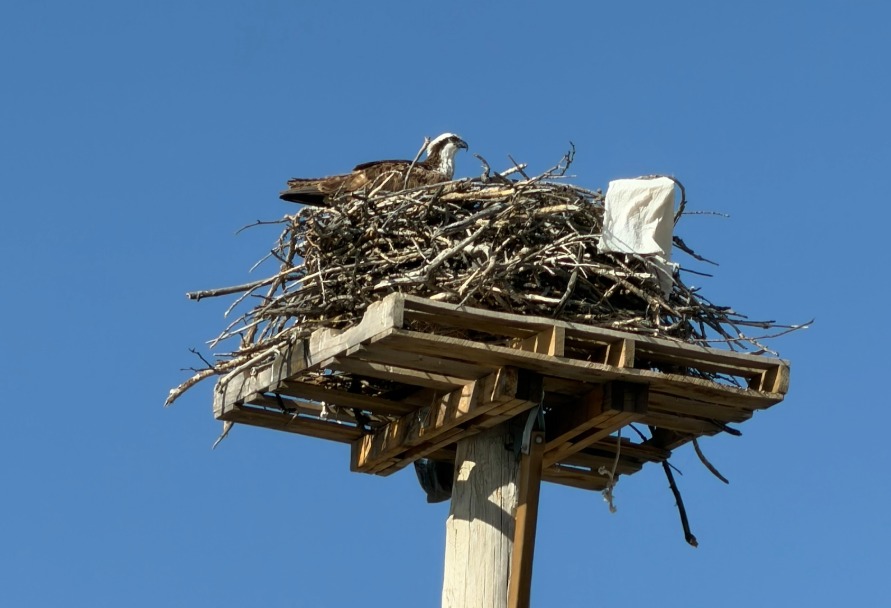
Each spring across southern Colorado, the return of ospreys is a welcome sight. These large birds migrate back to the region to raise their young. Because their diet is made up primarily of fish, they often settle near lakes, rivers and reservoirs. They’re adaptable birds, which is part of what makes them so successful. It’s also why they sometimes choose utility poles as nesting sites.
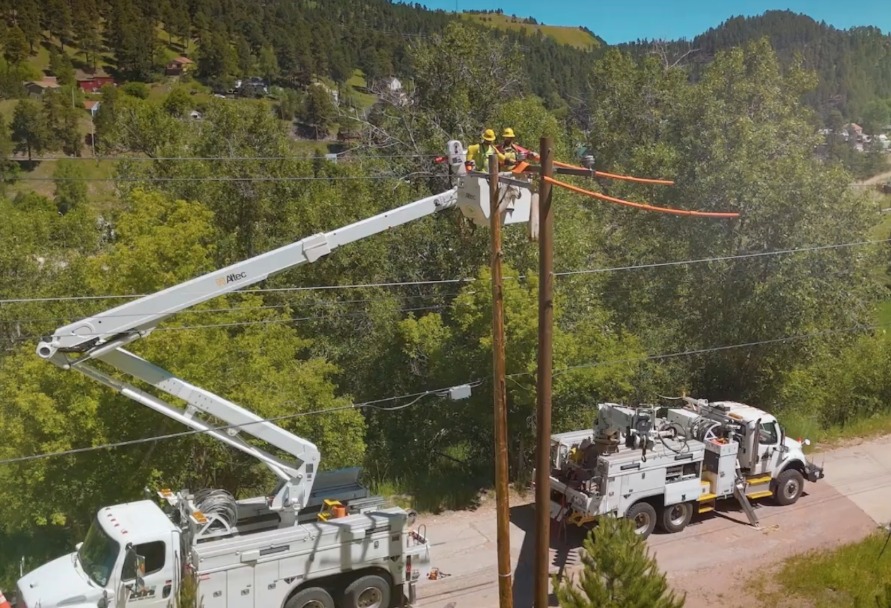
Osprey nests are large and heavy, built from sticks and debris collected over many seasons. To the ospreys, utility poles seem like a good spot to build, but when these nests sit on or near energized equipment, it creates safety concerns for our customers, our crews and the birds themselves.
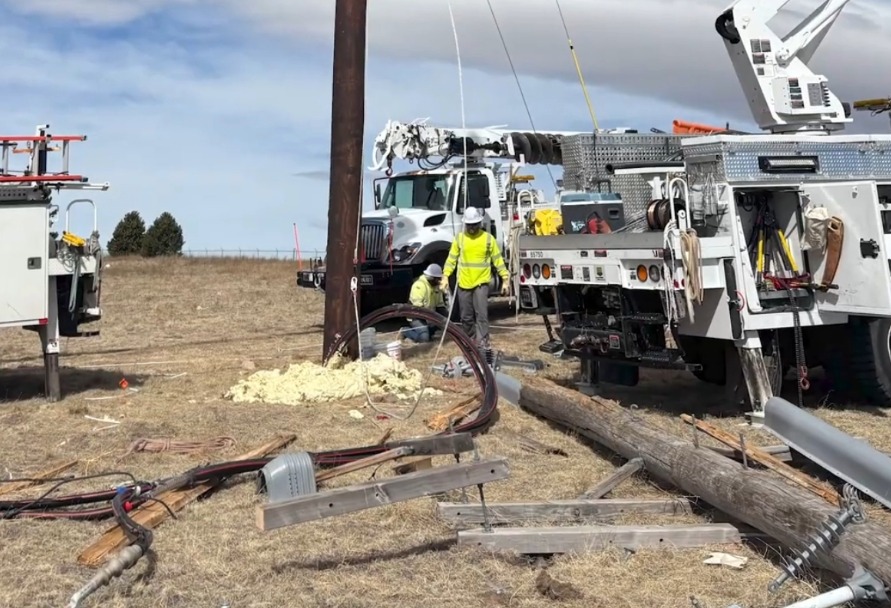
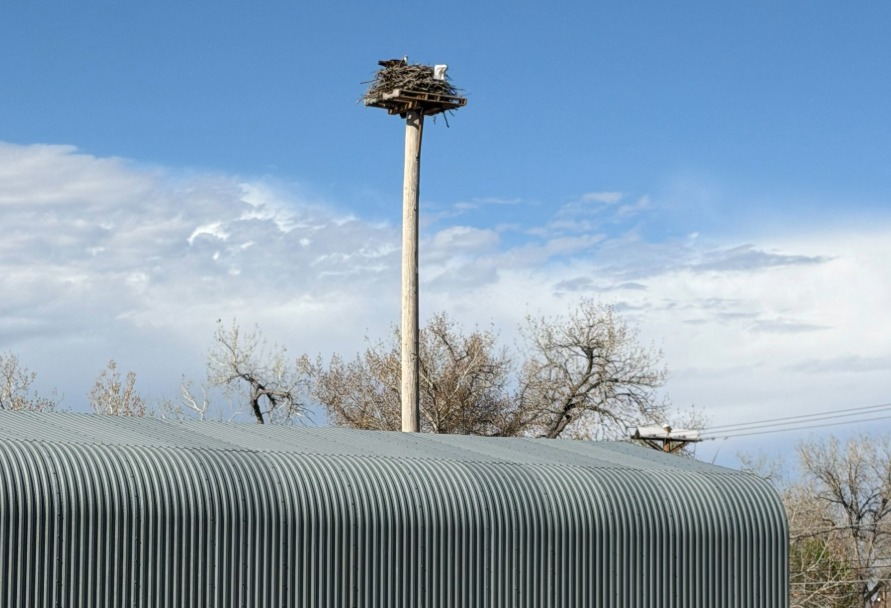
Recently we relocated three osprey nests in Southern Colorado. Two nests were moved in the Penrose and Florence area, and one in Pueblo. Each was carefully transferred to a specially built nesting platform nearby, giving the ospreys a safer place to nest while reducing risk to critical electric infrastructure.
Ospreys are protected under federal migratory bird laws, and we take that responsibility seriously. Our Avian Field Guide identifies nest relocation to purpose-built platforms as an effective solution that supports nesting behavior while lowering the risk of outages or fire.
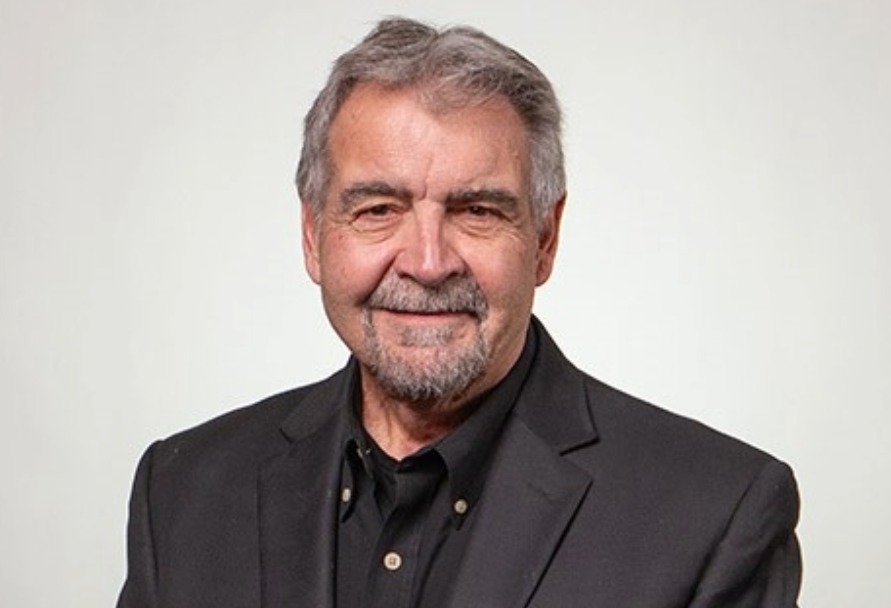
“Each spring we see ospreys returning to the same nesting sites, and that often includes power poles,” said Austin Belcher, principal environmental professional for Black Hills Energy. “Our goal is to protect wildlife while ensuring service reliability for our customers. Moving the nests to purpose-built platforms supports both.”
Ospreys readily accept platforms, often returning to them year after year, which helps keep birds safe while reducing risks around manmade structures like utility poles. Our environmental and electric operations teams carefully moved nesting materials from energized structures to platforms designed specifically for ospreys. These platforms were installed close to the original sites because ospreys tend to return to the same locations year after year. Follow-up monitoring has shown the birds returning to their relocated nests, a strong sign that the approach is working.
These relocations followed our wildlife safety protocols and Avian Protection Plan, which we first adopted in 2011. That plan is based on guidance from the Avian Power Line Interaction Committee, an organization that helps electric utilities protect birds while maintaining reliable energy delivery. It outlines clear procedures to prevent injuries to birds, reduce wildlife related outages and comply with state and federal regulations.
“Our crews did an outstanding job executing these relocations safely and responsibly,” said Adam Trevizo, operations manager at Black Hills Energy. “We’re proud of how our team collaborates across departments to balance environmental stewardship with operational needs.”
Projects like this are part of a broader commitment to wildlife protection across Colorado. We’re committed to delivering safe, reliable energy to our customers, and protecting our communities while we do it.
Learn more about our work across Colorado.
Read more Positive Energy